NO RECONCILE WITHOUT OPENING UP TRUTH
terjemahan bahasa Indonesia dari naskah ini bisa di klik disini
- Jokowi promised an investigation into these historical abuses while campaigning for President in 2014 – why, as you know, it took until 2021/2 for him to carry out an investigation – one year before he leaves office?
Yes, Jokowi did promise in his presidential election campaign in 2014 that he wanted to resolve cases of gross human rights violations in a dignified and fair manner. In fact, the RPJMN (National Medium Term Development Plan) program includes a program in the Nawa Cita. One of the points of reference is solving gross human rights violations. However, it’s unfortunately that at the end of his one-year reign, Jokowi only made his “confession” and “regret”.
This is a logical consequence of the inclusion of generals, people in Jokowi’s circle of power who are suspected of being involved in cases of human rights violations; the kidnapping of student activists (1998), the shooting of Trisakti students, the Semanggi I and II cases, the Tanjung Priuk case, the invasion of Timor Leste, etc.
This is what victims, human rights activists and civil society are very disappointed with Jokowi’s policy of giving trust and making them as his assistants, ministers who will of course protect their interests.
How is it possible to resolve cases of human rights violations when people who are suspected of being involved in cases of crimes against humanity are trusted to solve them?
Of course, Jokowi wants to leave a good legacy, so that he can be remembered and recorded in history as a president who was able to resolve human rights violations. However, the non-judicial settlement shortcut that Jokowi initiated, is not based on rules, legal norms that should be followed. That is, truth disclosure and holding of a trial is a must so that the legal status of the victims becomes clear.
- Does the government sincerely regret past rights violations? What does the lack of commitment to reform the military justice system and judicial processes indicate? Does the acknowledgment really acknowledge that rights violations do not “happen” out of thin air, but arise from the abuse of power by the government?
To be honest, as an Indonesian people who has noble and civilized ethics, I appreciate Jokowi’s step in conveying “confession” and “regret” for past gross human rights violations. However, when studied in more depth, Jokowi does not explicitly want to hold responsibility of the cases. He expressed regret but did not apologize either. The President also stressed not nihilize the judicial process. Why not strictly instruct the Attorney General to immediately investigate cases that have been recommended by Komnas HAM (National Commission of Human Rights)? Immediately form an ad hoc human rights court as demanded by the victims and Komnas HAM?
In fact, I am personally also disappointed by the statement of the Coordinating Minister for Political, Legal and Security Affairs Mahfud MD – who is of course in the capacity of an aide to the President – stating that it is very difficult to bring cases of gross human rights violations to court, because lack of evidence, witnesses and perpetrators many have died, etc.
This indicates that the commitment to resolve cases of gross human rights violations through the courts (judicial process) is mere lip service.
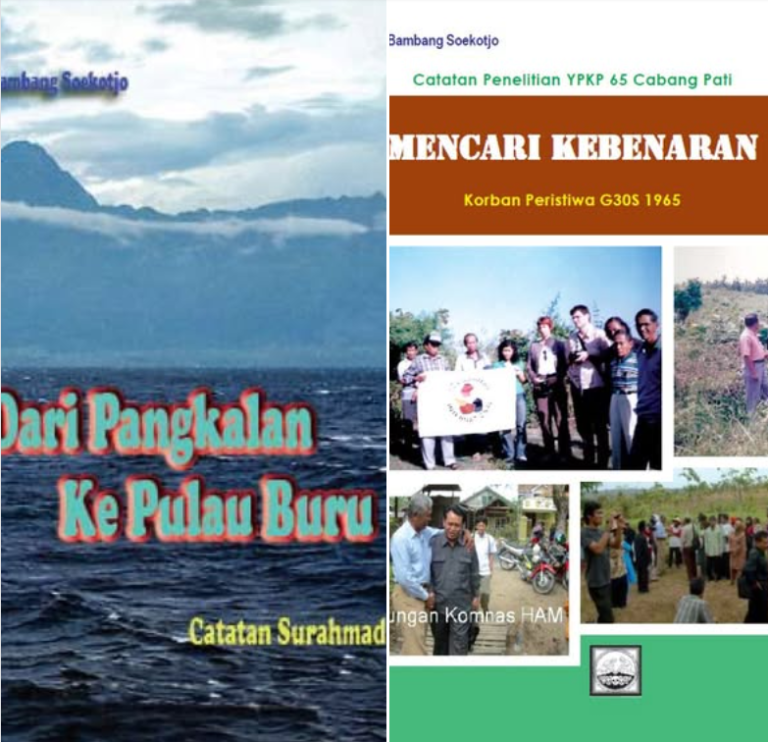
From the victim’s point of view, I always say that the evidence to bring the case against humanity, the 1965 genocide to justice, is more than sufficient. Many victims and witnesses are still alive. There are clear locations where the events occurred, for example on Buru Island, Nusa Kambangan Prison, Tangerang Forced Labor Camp, Salemba Jakarta, Kalisosok in Surabaya, etc. The time of happening is also clear for the period October 1965 – 1979 and even now the victims are still experiencing persecution. Also, administrative evidence of the Letter of Release of Political Prisoners signed by the military authorities of Kopkamtib (Commander of Safety and Disorder), Laksusda (Region Special Commando), etc. And, more importantly, YPKP 65 has found 356 locations of mass graves scattered throughout Indonesia. This is evidence of mass killings in Indonesia in 1965/1966.
So far there have been obstacles as a result of the military justice system and the judicial process inherited from the New Order regime. When the pro-justicia Komnas HAM Investigation Team conducted an investigation into the 1965/66 incident, no TNI/Military general wanted to be present to complete the investigation. Therefore Jokowi must ensure the need to reform the military justice system and revise Law Number 26/2000 concerning ad hoc human rights courts, so that generals suspected of being involved in cases of gross human rights violations can be presented, forced efforts to be questioned by Komnas HAM/Prosecutors.
It is true that the 1965/1966 crimes against humanity were extra judicial crimes committed by the military using abuse state of power.
I regret to say that President Joko Widodo’s statementon “acknowledgement” ang “regretness” is not enough. I urge the need to disclose the truth of the 1965 tragedy so that the public knows who the intellectual actors behind the 1965 mass killings that were in fact orchestrated by the authorities. The provision of physical compensation (reparations), medical/psychosocial services to victims, has not resolved the core of the problem.
- Why did they only decide to admit to the 12 rights violations, not the others? For example, the Chinese massacre in Kalimantan in 67, I don’t think is recognized, while the 65-66 massacre and the May 1998 riots are recognized.
That is proof of the government’s lack of seriousness in resolving human rights violations. Also, victims will receive reparations based on data that has been investigated by Komnas HAM. In fact, Komnas HAM in its investigation has not covered the victims as a whole. My experience in assisting Victims of 1965 in various cities throughout Indonesia, many victims have not received the SKKPH (Certificate of Victims of Human Rights Violations) issued by Komnas HAM. So, it is very necessary to open a new investigation into cases of gross human rights violations: the cases of killings of ethnic Chinese in West Kalimantan, Sarawak and North Kalimantan. In particular, Komnas HAM also needs to investigate the case of the Forced Labor Camp on Buru Island because it has sufficient evidence of crimes against humanity so that there is no longer any excuse for a lack of evidence so that it can be processed legally.
Until today the State/Government has not formed a Fact Finding Team to thoroughly investigate the number of victims of the 1965 Tragedy. In 1965/1966 there was a fact-finding team formed by President Sukarno led by Oei Tjoe Tat, but the work process was always controlled by the military so that they did not produce actual data. The fact-finding team could not carry out their duties because Oei Tjoe Tat was also arrested by the authoritarian regime of Suharto. So, if the government is serious about resolving the human rights violations of the 1965 Tragedy, I on behalf of YPKP 65 urge the State/Government to form a Team of Investigation/Fact Finding to record the number of victims as a result of detention, murder, kidnapping, torture, sexual harassment, forced labor including that occurred in West Kalimantan, Sarawak, North Kalimantan and other places throughout Indonesia. Also victims of Exile abroad, they are former Indonesian students who studied in China, Russia, Romania, Czechoslovakia, etc., who were prevented from returning home because their passports were revoked by the Suharto military government.
- How can this claim be understood as genuine, when many government policies and military strategies underlying rights violations still continue to this day? For example, the occupation of West Papua and the exploitation of its natural resources were major factors in the Wamena and Wasior incidents, but the government and military are advancing West Papua’s development against the wishes of the majority of indigenous Papuans.
Indeed, it is your suspicions, we feel it too. As long as the laws and legal regulations inherited from Suharto’s authoritarian New Order have not been repealed, it is impossible to carry out settlements for gross human rights violations.
Let me show you a few things: The Minister of Home Affairs Decree refers to Presidential Decree No. 28 of 1975 which prohibits former political prisoners and their families from becoming members of the Civil Servant or Military, Police, etc. Until now it is still valid and has not been revoked. Even though the Supreme Court has annulled it, the President has not revoked it. This is what ultimately causes the victim’s family, children and grandchildren to be discriminated against by regulations made by the government.
The 2022 Criminal Code also contains a prohibition on the spread of Marxist teachings originating from MPRS Decree No. XXV/Tahun 1966 (Temporarily National Assembly) which refers to President Sukarno’s Warrant to Suharto on March 11, 1966 whose contents had been manipulated by Suharto. How does the stipulation of the Law refer to an order that is not in accordance with the intent of the maker of the order, namely President Sukarno. And, it has survived despite the fall of Suharto’s authoritarian regime. Prohibition to study and spread Marxism is a fact of no freedom of opinion and democracy which can be used as a tool to repress the student movement.
It is these methods of military approach which are being preserved by the authorities referring to the success in destroying the Left movement in Indonesia in 1965/1966 and has continued until now which has not been resolved. In fact, new cases of human rights violations have emerged, including in Papua. It would not be wrong to say that the 1965 tragedy was The Mother of All Human Rights Violations in Indonesia. So, if the government of Indonesia want to resolve cases of human rights violations, it has to resolve the 1965 tragedy fairly.
- Do you think the confession could be part of a strategy to evade calls for justice for past rights violations, perhaps preventing criticism of the past of the man who is likely to become Indonesia’s next president? Given that Indonesia’s next presidential candidate (and the politicians around him) is credibly linked to some of the events that Jokowi has acknowledged?
The movement to uphold human rights of the 1965 tragedy began in 1979 when human rights activists in various countries around the world criticized Indonesia for detaining 15,000 political prisoners on Buru Island and other cities throughout Indonesia. Since then, mass releases of political prisoners have been carried out. However, for political prisoners the release only moved the detainees to a wider area without barbed wire n mbut the soldiers still handcuffed their hands and feet. Political prisoners are still controlled by the army and their basic rights are limited. To this day.
In 1998, when the authoritarian regime of Suharto fell, there was a glimmer of hope with the appointment of President Gus Dur (Abdurahman Wahid), as a president who understood the values of human rights and democracy. However, he was eventually dropped as well. And, the president who replaced him until now has been “flirting” with the remnants of Suharto’s New Order cronies.
Jokowi gives the red carpet to people/generals who are suspected of being involved in cases of gross human rights violations in his circle of power. There are ministers, advisers to the President, presidential staff offices, etc. As a result, the law enforcement/human rights policies in Jokowi’s government have been stagnant if not said to have failed. (See the answer to question number 1).
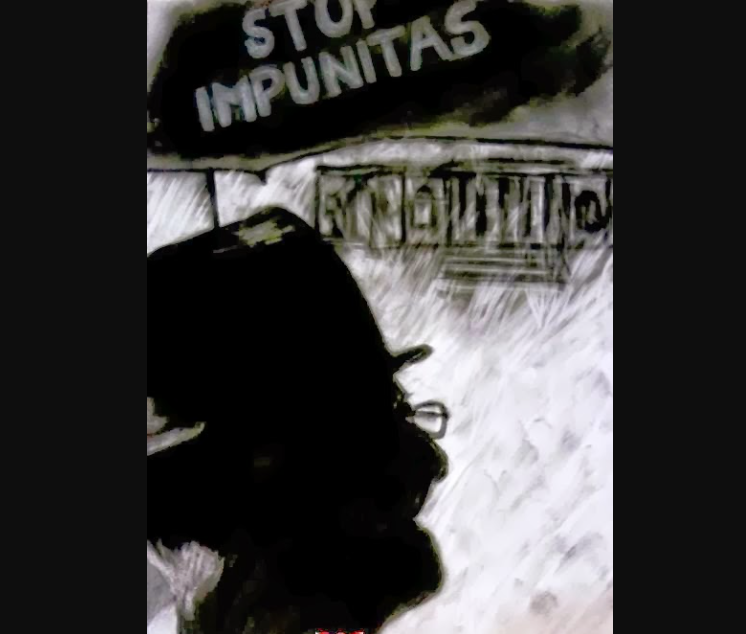
It should be remembered, as long as the demand for justice, human rights enforcement has not been carried out by the government to prosecute the perpetrators and deter human rights criminals, this means that human rights violations have not been resolved. The state clearly wants to protect human rights criminals and perpetuate impunity. For Victims the stance is very clear, uphold the law, form an ad hoc Human Rights Court and immediately conduct investigations of criminals who are very clearly involved in cases of crimes against humanity. Victims urge and demand justice, truth and reparation as mandated by the Law on Human Rights Number 39 Year 1999.
- Last week the acquittal of a soldier accused of killing Papuan civilians in the Bloody Paniai case shows the government is not sincere in abolishing impunity for abuses, but today a soldier is also jailed for life for the mutilation of a Papuan civilian in August. What can we understand about these two cases – did they represent a real change in justice for the victims?
Since the beginning, victims, human rights activists and civil society organizations have doubted the government’s seriousness insolving human rights criminals at the Human Rights Court of the Paniai case, Papua. This can be seen from the selection of judges who are inexperienced, the submission of the defendant a liaison officer at the Kodim (Military Regency Region) level. In fact, this gross human rights violation involved a chain of command from the command structure of the XVII/Cendrawasih Military Command. And, predictably, the accused was eventually acquitted.
However, in the mutilation case carried out by the military in Mimika Papua, the court decided to sentence the defendant to life imprisonment.
We appreciate the judge’s decision to sentence life imprisonment. However, we have not immediately concluded that there has been a change in TNI-AD policy. The judicial system in Indonesia, which still has the Courts of Appeal, Cassation and Judicial Review, is still prone to manipulation and could acquit the defendants.
- Jokowi previously promised to eliminate all forms of impunity in the national legal system, including the 1997 Military Justice Law – it hasn’t happened yet, why? Because Jokowi changed his mind, or was stymied by the politicians around him, many of whom were previously top military brass.
It was predictable. The intention to eliminate impunity in the national legal system, including reforming the Law on Military Justice, has not been implemented. Because, the group that has the most interest in the alleged human rights violations is still in Jokowi’s circle of power. This can be seen from the existence of the Presidential Chief of Staff, Members of the Presidential Advisory Council, Ministers who hold the key to the government’s policy strategy, still holding control of power. Meanwhile, the people’s representatives in parliament, political parties do not carry out their function as an effective executive control tool. I have never heard of a political party that firmly and straightforwardly wants to fight for the interests of victims of human rights violations. On the contrary, political parties have become a tool of legitimacy to pass laws that are not in favor of the interests of the victims or the people.
- The Supreme Court of the Republic of Indonesia recommended programs for victims such as physical rehabilitation, psychological support, health assistance, and scholarships. Unfortunately, however, the government did not implement these measures, instead removing the victim from the decision-making process. Why didn’t the government follow the Supreme Court’s advice?
This question needs to be corrected. The Supreme Court did not recommend programs for victims to obtain physical rehabilitation, psychological support, health assistance and scholarships. However, there is Law Number 13/2006 and Revision to Law Number 31/2014 concerning the LPSK (Witness and Victim Protection Agency) where in articles 7 and 8 stated: Victims of gross human rights violations will receive medical/psychosocial services from the LPSK including physical rehabilitation, scholarships, etc. So, before Jokowi conveyed the idea of a solution to provide reparations, recovery to victims through non-judicial settlements, there was already a law that regulated it. Just execute it.
One other thing to know. The LPSK will also provide compensation to victims of gross human rights violations after a court has decided permanent legal decision. So, Victims of gross human rights violations of the 1965 Tragedy and YPKP 65 have always urged that an ad hoc human rights court to be held so that victims obtain legal certainty and obtain their rights as mandated by law.
The Supreme Court also annulled Presidential Decree Number 28 of 1975, namely the Presidential Decree which classified Political Detainees of Class “C”. Based on this Presidential Decree, the State could terminate civil servants/military employees because they were deemed to be involved in the September 30th Movement. Based on this Presidential Decree, it is also the legal of discriminatory regulations against citizens who are considered descendants of former Political Prisoners/Communist members.
Although this Presidential Decree has been canceled by the Supreme Court, the president has not revoked it. This is an important matter that the Jokowi government should immediately implement the Supreme Court’s recommendation. This is proof of President Jokowi’s lack of political will and ability to enforce the law, especially against victims of gross human rights violations of the 1965 tragedy.
Why didn’t the government follow the Supreme Court’s advice? The answer is in Number 1 and Number 2 as I have described above.
- Is this an attempt by the government to draw a line under the past, to pave the way for P. Sub1anto’s presidency? And if he wins next year’s election, what are the implications for human rights and justice in Indonesia? What are the possible implications for restive regions such as Aceh and West Papua?
It is clear, President Jokowi wants to leave a legacy, under his leadership he was able to resolve gross human rights violations – even with a non-judicial settlement. This is what the Victims and human rights activists and civil society in Indonesia and abroad are worried about. What President Jokowi has done with shortcuts to non-judicial settlements has the potential to perpetuate impunity.
Victims continue to urge that the generals who are suspected of being involved in cases of gross human rights violations must be sentenced before the ad hoc human rights court. In this way human rights criminals will receive deterrence and punishment. Instead of obtaining a red carpet gaining a special position in the circle of power.
What are the implications if Prabowo Subianto finds his way to the presidency in 2024?
This is a setback for democracy in Indonesia. Prabowo, who is the former son-in-law of dictator Suharto, once said he would continue with an authoritarian leadership style like General Suharto, the killer in the 1965 massacre. I could not imagine that there would be instability, people disobedient, and people resistance everywhere.
Conclusion and Urgent Action
- Urge the President of the Republic of Indonesia Ir. Joko Widodo to immediately follow up on statements of acknowledgment and regretness for the occurrence of gross human rights violations, especially during the 1965-1966 Human Rights Tragedy, immediately take responsibility for the occurrence of crimes against humanity and instruct the Attorney General to develop an Ad Hoc Human Rights Court to investigate the perpetrators (human rights criminals) who suspected of being involved in this crime, so that there is punishment and deterrence and there is no reocurrence of the same crime in the future.
- Immediately ensure the true, honest and open disclosure of the crimes against humanity in the 1965-1966 tragedy and reveal the chain of command of the 1965 genocide.
- Immediate restore for Victims’ rights: political, social, economic and cultural rights that were illegally seized as an implication of the 1965-1966 crimes against humanity, as well as ending the stigma and discriminatory treatment of victims and their families.
- Building Memorial Parks in places of Mass Graves, places of execution and torture as signs and reminders of crimes against humanity for the learning of future generations.
- To the National Commission on Human Rights (Komnas HAM) and the Witness and
Victim Protection Agency (LPSK) of the Republic of Indonesia together with Victims’ Organizations to immediately collect data/publish SKKPH (Certificate of Victims of Human Rights Violations) to all Victims and their families throughout Indonesia and abroad.
- To the Western Countries (USA, United Kingdom, Germany, Australia) which were
involved in orchestrating mass killings in the 1965-1966 tragedy based on the published documents of the CIA, UK, Germany, immediately acknowledge and express regret and promote international solidarity to provide reparation to victims and their families.
- To the DPR-RI (People’s Assembly of The Republic of Indonesia), immediately
complete the discussion and approve the Draft Law on the Truth and Reconciliation Commission as a legal umbrella for the sustainable recovery of victims.
Keep Solidarity for Human Rights and Democracy.
It Would be No Reconcile Without Opening Up Truth.
Bedjo Untung
Chairperson of YPKP65
I attach also the response of Arif Harsana Victim of Exile who stays in Munster Germany because his passport was banned in 1965.
Before I answer your question, first I want to express my attitude towards President Jokowi’s recent statement which was widely responded by the national media in Indonesia as well as by international media both print and social media.
On Wednesday 11th January 2023, President Jokowi acknowledged and expressed regret over gross human rights violations in the past.
As a follow-up, on Monday 16th Januari , Jokowi held a meeting with members of the National Human Rights Commission (Komnas HAM) for the 2022-2027 period at the Merdeka Palace, Jakarta.
The Coordinating Minister for Political, Legal and Security Affairs (Polhukam), Mahfud MD, in his press statement said that during the meeting the president and Komnas HAM discussed a number of matters including past gross human rights violations, and their resolutions both judicially and non-judicially.
For me, as an exile victim who was once a citizen who lost citizenship because my Indonesian passport was revoked by teror rezm of general Suharto, I see the need to welcome the important acknowledgment made by President Jokowi as the head of state.
On the basis of this acknowledgment, a way was opened for the disclosure of the truth regarding historical facts, which so far had been deliberately concealed by the corrupt authoritarian military regime of the New Order/Suharto.
For this reason, it is necessary to draw lessons from the experiences of truth commissions set up by the President in various countries, such as Chile, Tanzania and Colombia, because these countries are similar to Indonesia which is changing from authoritarianism to democracy.
The truth commission formed by the President works transparently by involving elements of the wider community, especially from the families of victims and survivors as well as legal experts who care about human rights.
The truth commission need sufficient time to complete their work to then make a report on the results of its work to the President.
The contents of the report are in the form of two recommendations that need to be carried out by the President, namely as follows:
First, the acknowledgment of the head of state opens the door for the growth of new narratives about the nation’s dark and bloody past history which also includes experiences of victims and collective memory in society. This new narrative is needed to heal the wounds of the nation, replacing the official version – which has so far been dominated by the official version created by the corrupt authoritarian regime of the New Order / Suharto which is full of lies manipulation and even distortion of facts, which for decades has destroyed civilization and poisoned and divided the harmony of people’s lives. The healing of deep nation’s wounds is the duty of all the people, every conscious citizen , who want to live in a society that respects noble values of humanity and actively participates in maintaining world peace based on social justice and participates in protecting the safety of the environment from the dangers of climate change with bad consequences are increasingly felt.
Second, the truth commission report contains recommendations regarding victim recovery program, that is the responsibility of the state, bearing in mind that for decades they suffered hardships in his life as a result of discriminatory legal products applied to Victim by authoritarian rezim.
For decades the victim’s family being a second-class citizen and living with a negative stigma that prevents him from living his life like other citizens whose basic rights as full citizens are recognized in the Constitution.
Therefore, in the context of recovering victims, in addition to restoring the basic rights of citizens who have been taken away by the military regime, this also includes the return of their property and compensation for the suffering in their life.
And then below is my answer to your question.
- The only person who knows the answer best is President Jokowi himself. I can only surmise, maybe previously Jokowi did not feel capable enough to start tackling this big problem.
- The President’s decisions do not always accurately reflect his personal wishes, which may be sincere, but are the result of balancing the political forces that support his government.
- This is also our question. Given the significant number of victims and the extraordinary level of cruelty to victims, the genocide against ethnic Chinese in Kalimantan should also be included in the list of gross human rights violations.
- This is your opinion, not ours.
We have our own stance on the Papuan issue. For us, Papua is not a colony of
Indonesia. Papua, formerly known as West Irian, is part of the sovereign territory of the
Republic of Indonesia, covering from the westernmost Sabang to the easternmost
Merauke, the former territory of the Dutch East Indies colony, as stated in the
Proclamation of Independence of the Republic of Indonesia on August 17, 1945. We,
together with all the Indonesian people, including the people in Papua, are fighting for
the achievement of a society that is more democratic, free from corruption and
respects noble values of Humanity/Human Rights and social justice and participates in
maintaining world peace based on social justice and participating in maintaining
security of the earth from the dangers of climate change whose bad consequences are
increasingly visible today.
- Our response at the beginning, in our view, has also answered this question.
- We see that there has been progress in dealing with the Papua issue compared to the
administrations before Jokowi.
- In my view, the answer to this question can be answered like Answer no.2.
- We also consider this problem necessary to be questioned.
Arif Harsana
Victim of Exile
Germany
About the Author